There is a question that sits at the heart of every other development conversation in Gboko/Tarka Federal Constituency - a question that must be addressed before roads can be built, before farms can yield their full potential, before children can walk safely to school, and before markets can function with any predictability. That question is the question of security.
It is not a new question. It is not one that our people have failed to raise. On the contrary, it has been raised - loudly, repeatedly, and with increasing desperation - for years. What has been lacking is not the voice of the people, but the ears of those entrusted with their representation.
This must change.
The Reality on the Ground
To speak about security in Gboko/Tarka is not to speak in abstractions. It is to speak about the farmer in Tarka who planted his yams in March and returned in June to find his farmland occupied, his crops destroyed, and his livelihood erased in a single season. It is to speak about the mother in a rural community who no longer allows her children to walk to school because the road between their village and the nearest classroom passes through territory that has become unsafe. It is to speak about the market woman who closes her stall before dusk - not because trade has ended, but because darkness has become dangerous.
These are not isolated stories. They are the lived experience of thousands of families across our constituency. And behind every statistic, behind every news headline that briefly mentions Benue State before moving on, there are real people - people with names, with families, with farms they inherited from their fathers and hoped to pass on to their children.
The farmer-herder crisis, in particular, has inflicted wounds on this constituency that go far beyond the loss of crops and livestock. It has displaced communities. It has disrupted livelihoods that took generations to build. It has created a climate of fear that suppresses economic activity, discourages investment, and forces our people to make impossible choices between their land and their lives.
“A people who cannot farm in peace cannot eat in peace. A people who cannot eat in peace cannot build in peace. Security is not one priority among many - it is the foundation upon which every other priority depends.”
Why Representation Matters in This Fight
There is a temptation, when discussing security, to treat it as exclusively an executive function - a matter for governors, for the military, for security agencies. And while it is true that the operational response to insecurity lies largely with these institutions, the role of the legislature is neither peripheral nor ceremonial.
A serious representative in the House of Representatives has the platform to do what no single community, no matter how courageous, can do alone:
- Legislative Advocacy: Pushing for the passage and enforcement of laws that protect farming communities, regulate land use, and provide a legal framework for the resolution of disputes before they escalate into violence. The Open Grazing Prohibition and Ranches Establishment Law enacted in Benue State was a landmark step. But legislation without federal reinforcement and consistent enforcement remains incomplete.
- Budgetary Oversight: Ensuring that federal security allocations actually reach the communities they are meant to protect. Too often, funds earmarked for security infrastructure, rural policing, and conflict resolution programmes are diverted, delayed, or distributed without accountability. A vigilant legislator can track these allocations and demand results.
- National Attention: Elevating the security challenges of Gboko/Tarka from a local concern to a matter of national legislative attention. When a constituency’s representative speaks with clarity and persistence on the floor of the House, it becomes harder for the federal government to treat the issue as someone else’s problem.
- Inter-Agency Coordination: Facilitating dialogue between federal security agencies, state government, local authorities, and traditional institutions to develop coordinated responses that address both the symptoms and the root causes of insecurity.
What Our People Are Saying
In every consultative engagement conducted across the constituency, security emerged not as one concern among several, but as the concern - the issue that, if left unaddressed, renders every other development promise meaningless.
Elders in Tarka spoke of communities that have effectively emptied as families fled to safer areas, leaving behind farmland that had been cultivated for generations. They described the psychological toll - not just the physical danger, but the deep sense of abandonment that comes from feeling that those in authority are either unwilling or unable to protect you.
Women leaders described the particular vulnerability they face - the burden of holding families together in the midst of displacement, the challenge of feeding children when the farm that sustained them has been destroyed, and the fear that accompanies every journey to the market or the stream.
Young people expressed frustration - not just at the insecurity itself, but at the political class’s apparent willingness to discuss the crisis only during election campaigns and forget it the moment votes have been counted.
These are not sentiments that a responsible leader can hear and set aside. They demand a response - not a response of words, but of sustained, principled, relentless action.
A Framework for Action
Addressing the security challenges facing Gboko/Tarka requires an approach that is both immediate and structural. Immediate, because people are suffering now and cannot wait for long-term solutions to mature. Structural, because the root causes of insecurity - land disputes, climate-driven migration, weak institutional frameworks, and insufficient investment in rural security infrastructure - will not resolve themselves.
Immediate Priorities:
- Advocacy for Enhanced Security Presence: Pressing for the deployment of adequate security personnel to the most vulnerable communities within the constituency, with a particular focus on farming corridors and market routes that have been repeatedly targeted.
- Support for Displaced Communities: Facilitating access to federal and state-level relief and resettlement support for families and communities that have been displaced by violence. Displacement should not mean abandonment.
- Emergency Communication Infrastructure: Advocating for the establishment of communication systems that allow rural communities to alert security agencies quickly when threats emerge. The current reality - where communities under attack have no reliable means of calling for help - is unacceptable.
Structural Priorities:
- Legislative Strengthening: Working within the House of Representatives to advocate for comprehensive federal legislation that addresses the farmer-herder crisis with the seriousness and specificity it demands - including provisions for land use regulation, conflict mediation, and the protection of agricultural communities.
- Investment in Rural Security Infrastructure: Championing federal investment in security infrastructure within the constituency - including rural police posts, surveillance systems, and improved road networks that enable faster security response.
- Conflict Resolution Mechanisms: Supporting the establishment of community-level conflict resolution mechanisms that bring together farmers, herders, traditional leaders, and security agencies in structured dialogue aimed at preventing violence before it erupts.
- Economic Alternatives: Advocating for investment in ranching infrastructure and alternative livelihood programmes that reduce the competition for land resources - addressing not just the conflict, but the conditions that produce it.
The Moral Dimension
Beyond policy and legislation, there is a moral dimension to this crisis that must not be lost in the language of governance. The people of Gboko/Tarka have a fundamental right to live on their land, to farm their fields, to walk their roads, and to sleep in their homes without fear. This is not a political position. It is a human one.
Any representative who treats the security of his constituents as a secondary consideration - who prioritises personal ambition over the protection of the people - has fundamentally misunderstood the nature of the mandate. The first duty of representation is protection. Everything else is built on that foundation.
“You cannot speak of development to a people who do not feel safe. You cannot speak of progress to a mother who does not know whether her children will return home. Security is not a talking point. It is a moral obligation.”
A Personal Commitment
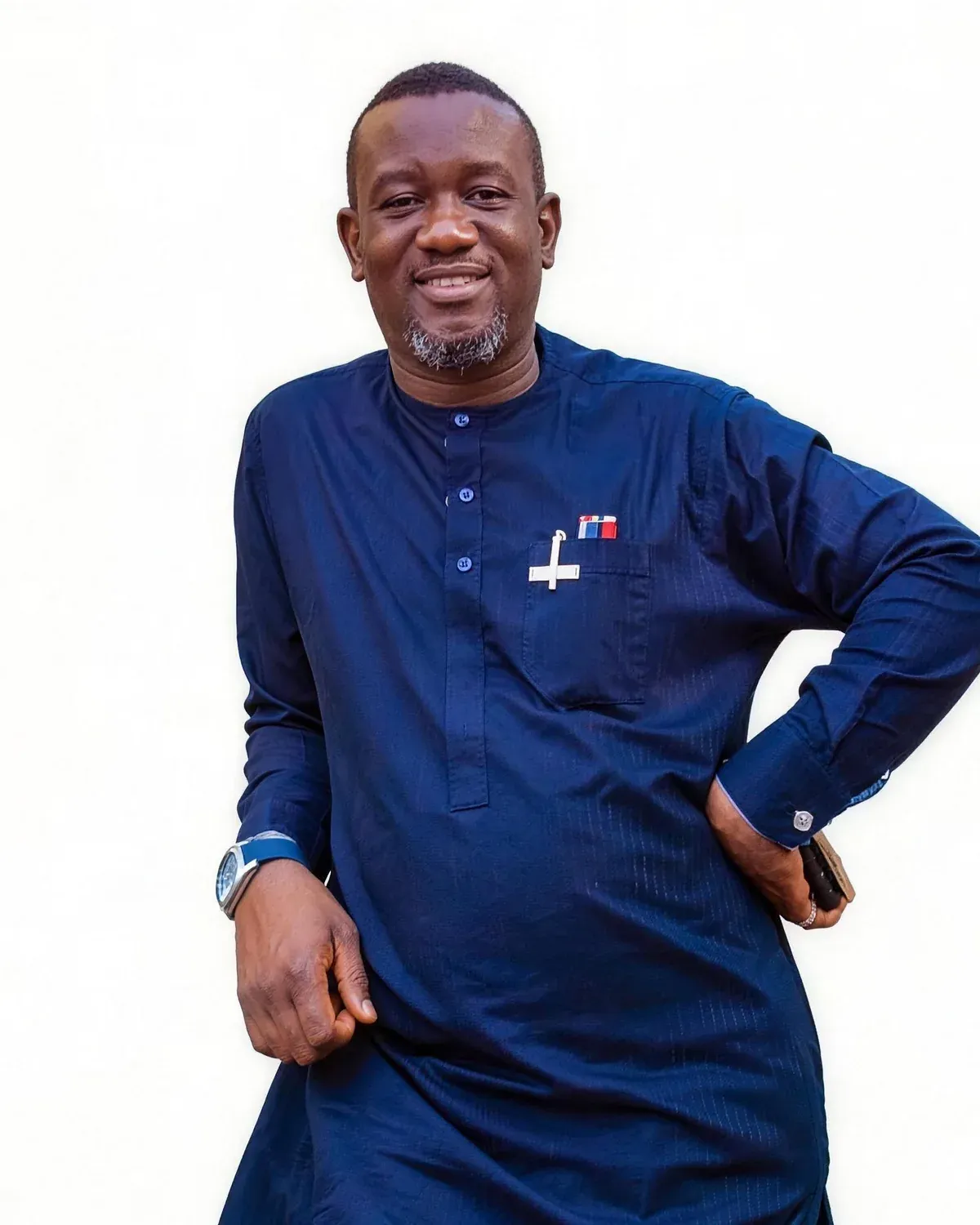
Hon. Andrew Torhile Uchi does not raise this issue for political advantage. He raises it because it is the truth - and because the people of this constituency deserve a representative who will speak that truth consistently, not just when it is convenient.
His commitment is clear: to make the security of Gboko/Tarka Federal Constituency a permanent, non-negotiable priority of his legislative agenda. Not as a single speech or a single motion, but as a sustained campaign of advocacy, oversight, and engagement that persists until the people of this constituency can once again live and work in the peace they deserve.
This is not a promise that will be forgotten after an election. It is a principle that will guide every day of service.
The people of Gboko/Tarka have been patient. They have been resilient. They have endured what no community should be asked to endure. What they need now is not sympathy - it is action. Principled, relentless, unwavering action.
And that is what they will receive.